
Scientists / Open questions
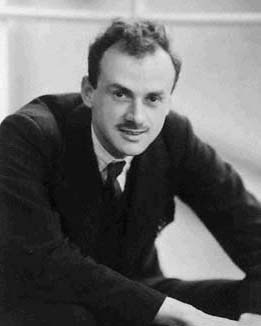
Paul A.M. Dirac
Quantum mechanics; quantum field theory
1933 Nobel Prize in Physics
28 questions
Coordinate-independent local energy density of the gravitational field in general relativity
The existence of magnetic monopoles and the explanation of electric charge quantization (Dirac, 1931)
Consistent quantization of general classical constrained Hamiltonian systems: operator ordering and the quantum Dirac bracket (Dirac, 1950)
Non-perturbative quantization of Dirac's 1950 gauge-foliation-coupled electrodynamics: the Hamiltonian, spinning electrons, and the self-energy question
Consistent interactions and cluster separability in Dirac's three forms of relativistic dynamics
Quantizing Dirac's 1954 classical theory of interpenetrating electron streams: the noncanonical stream algebra, spin and Fermi statistics, and the point-electron limit
The physical interpretation of Dirac's complex formal probability for non-commuting observables and the completion of the classical-quantum analogy
Dirac's gauge-invariant formulation of quantum electrodynamics: the physical one-electron state space, its dressings, and the dynamics of Faraday lines
Completing Dirac's coordinate-fixed Hamiltonian formulation of gravitation: strong-field solvability of the conformal-factor equation, the global bracket kernel, and spinor and point-particle sources
Poisson brackets of the retarded and advanced potentials in the Hamiltonian theory of point electrons
Linear independence and error control in Dirac's non-orthogonal mixed-basis first-order perturbation scheme for rearrangement collisions
Completing Dirac's quantum theory of point electric charges and magnetic poles: the consistency and calculability of the quantum field theory of electric and magnetic charge
Dirac's 1953 absolute-time electrodynamics: the unfinished program of spin, multiple particle species, and the physical meaning of absolute time
Quantum constraint closure for Born-Infeld electrodynamics: Dirac's 1960 open problem of constructing a consistent quantum theory
Controlled quantum treatment of the outer region, interior-exterior matching, and interior accuracy of the exchange-corrected Thomas-Fermi (Dirac) atom
Existence of interacting local Hamiltonian densities satisfying Dirac's surface-deformation commutation relations: are atomic systems localizable? (Dirac, 1948)
Dirac's 1942 Bakerian Lecture problem: a drastic improvement of the quantum-mechanical formalism to a complete, directly interpretable relativistic theory
Is there an Æther? Whether a preferred-frame structure is required for the quantized theory of the electromagnetic field and electrons
Uniqueness and bracket consistency of the stress tensor obtained from a curvature-independent Hamiltonian on arbitrary space-like surfaces (Dirac 1955)
Completing Dirac's 1937 complex-variable representation of quantum mechanics: real-axis pole prescriptions, singular operator representatives, boundary-condition selection, and delta-function representatives
Completing Dirac's theory of finite-size particles in the gravitational field: surface matching conditions, nonspherical stability, and spin
Quantizing Dirac's 1951 constrained-potential theory of electrons: spin, charge quantization, and self-energy
Completing the two-particle relativistic QED treatment of electromagnetic processes on hydrogen: recoil, retardation, near-pole instability, and error bounds beyond the Eden–Rickayzen (1953) strong-interaction approximation
The exact vacuum ket of quantum electrodynamics in Dirac's Schrödinger-picture formulation: construction, Lorentz covariance, and ground-state status